
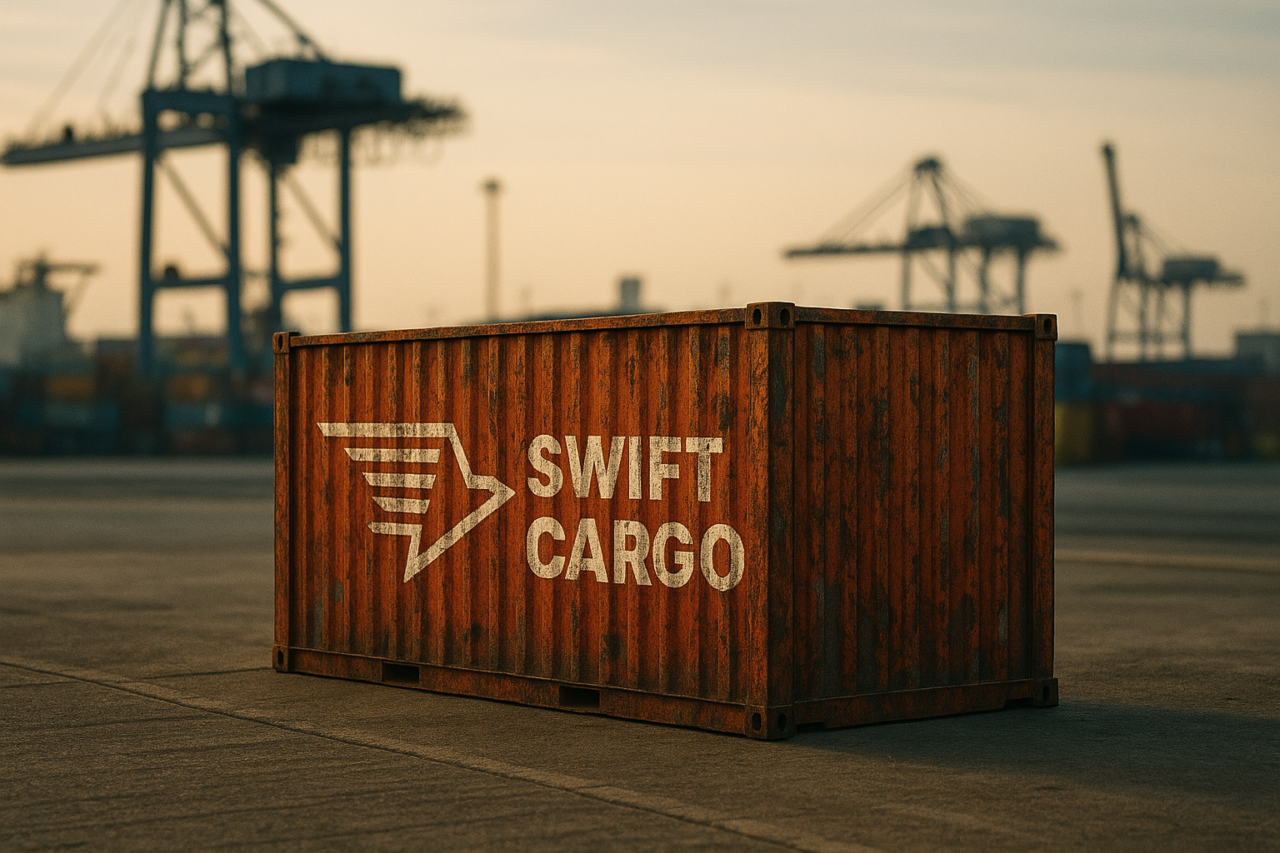
In logistics, longevity is a strength only when it comes with the ability to change. Few industries have been jolted by the last decade like freight and supply-chain services. Customers no longer judge a cargo company on reliability alone; they expect real-time visibility, seamless digital service, and modern payment flexibility. At the same time, the market itself has been re-shaped by faster e-commerce cycles, recurring geopolitical disruptions, and the steady rise of automation and AI.
What stands out in 2025 isn’t that new logistics startups are digital-first. That’s expected. What stands out is how legacy operators are learning to behave like digital natives without losing what made them durable in the first place. Swift Cargo Solutions, founded in 1999, is a clear example of this shift. With more than two decades in freight forwarding and a network built through experience, Swift Cargo earned its place through the classic pillars of logistics: dependable lanes, operational know-how, and long-term customer trust.
But over the last year, Swift Cargo has made a deliberate pivot toward the future. The company rebuilt its website from the ground up, reorganized its marketing to be visible in an AI-driven discovery world, expanded payment options to include crypto, strengthened both local and global partnerships, and redesigned customer service around digital-first expectations. These upgrades might sound like a checklist at first glance, yet together they signal something bigger: a generational transition in how logistics firms earn trust and stay relevant.
Here’s how Swift Cargo is modernizing in 2025 while protecting its legacy, and why this tells us something important about the direction global logistics is heading.
A 1999 company operating in a 2025 mindset
The logistics world that produced Swift Cargo in 1999 feels almost like a different industry. Freight decisions were made through calls and faxes, visibility was limited, and the internet was helpful but not central. Relationships were the operating system.
Fast forward to 2025, and the buyer has changed. Shippers compare providers like they compare platforms. Procurement teams expect instant access to information. Small exporters want the same slick, transparent experience they get from e-commerce apps. And everyone, whether B2B or B2C, moves under tighter timelines and higher uncertainty than ever before. If Swift Cargo wanted to keep serving the next generation of customers, it had to close the distance between older industry habits and modern buyer expectations.
The company didn’t try to abandon its roots. Instead, it focused on rebuilding the way those roots are experienced by customers today.
A website designed as a product experience
For a long time, logistics websites functioned like brochures. They signaled credibility, listed services, and encouraged visitors to call or email. That model doesn’t hold up anymore.
In 2025, a logistics website is the first proof of service before any conversation happens. Customers want to explore routes, understand capabilities, request quotes, and access tracking without friction. A modern site doesn’t just tell you a company exists; it shows you how easy the company will be to work with.
Swift Cargo’s full website rebuild is significant because it reframes the brand from a traditional forwarder you contact into a service you can interact with immediately. The best digital-first logistics sites tend to prioritize a few key ideas: clarity over complexity, self-serve pathways, and visibility that makes customers feel informed rather than dependent.
By modernizing its digital “front door,” Swift Cargo is doing more than improving aesthetics. It is shortening decision cycles, accommodating mobile-first users, and aligning the online experience with the speed and professionalism it has long delivered offline.
Speaking to humans and machines in the AI era
Marketing has quietly changed in 2025 because discovery has changed. Customers still use search engines and read articles, but many now begin their research through AI assistants. Procurement teams ask bots to summarize vendors. Small businesses use LLM tools to compare routes, prices, and service terms. Even inside companies, teams rely on AI to shortlist providers before a human ever gets involved.
Swift Cargo’s decision to rebuild its marketing around AI-era discovery shows it understands that visibility now depends on being legible to both people and machines. That means clear language, structured service explanations, consistent terminology about routes and modes, and content that answers actual shipping questions directly rather than hiding behind vague slogans.
This isn’t about chasing a trend. It’s about adapting to the new reality that logistics decisions are increasingly shaped through automated layers. If a company wants to be chosen, it has to be understandable in AI-mediated research environments. Swift Cargo is positioning itself to show up not only in traditional searches but also in the summaries and recommendations produced by the tools buyers actually use.
Payment flexibility that matches global trade today
Logistics has always been global. Payments haven’t always been smooth. International invoicing still comes with real friction: slow bank settlements, currency conversion costs, and uneven financial access depending on where a customer operates. Those pains are especially sharp for smaller exporters, digital-native brands, and companies doing high-frequency cross-border shipping.
By diversifying payment methods to include crypto, Swift Cargo is meeting a growing market need rather than performing a novelty act. Crypto settlement doesn’t replace traditional finance, but it expands the rails customers can use when traditional banking is slow, expensive, or inconvenient.
Here is the single list worth keeping in view for why this matters in 2025:
- Cross-border clients often want faster settlement than correspondent banking can offer
- Many digital-native businesses already manage treasury in stablecoins
- High-frequency shippers benefit from quicker, cleaner reconciliation
- Some regions face costly or unreliable local banking infrastructure
- Flexible rails reduce friction for new markets and smaller exporters
Accepting crypto won’t be the deciding factor for every customer. But it can be a deciding factor when speed, access, or currency friction would otherwise slow down trade. For a legacy company, building that option now is a signal of readiness for the trade finance stack that’s emerging.
Partnerships that blend local depth with global reach
No software can replace one of logistics’ oldest truths: network quality wins. Legacy operators survive because they know lanes, customs rhythms, carrier behaviors, and local bottlenecks in ways that newcomers can’t replicate quickly.
Swift Cargo’s push to strengthen both local and global partnerships builds on that advantage while modernizing how it scales. In today’s environment, partnerships aren’t only about coverage; they’re about resilience. Global disruptions, rerouted shipping lanes, port congestion, sudden regulatory shifts… have turned adaptability into a core value. A broad partner web gives a freight-forwarder the ability to reroute quickly, stay reliable under stress, and confidently serve more complex client needs.
There’s also a subtle modern logic here: partnerships now function as part of a hybrid digital model. Customers experience one unified provider with one set of standards, one interface, and one support flow, while execution happens through a distributed set of trusted specialists. That hybrid approach is becoming the blueprint for modern logistics: digital coordination layered on top of real-world expertise.
Customer service built for the speed of modern shipping
Customer service has always been the emotional heartbeat of logistics. One late shipment can cascade into missed product launches, empty shelves, or stalled production lines. In those moments, it’s not enough to move freight well: the company has to communicate well.
Swift Cargo’s move to rebuild customer service around digital expectations reflects another generational change. Customers don’t want to chase updates; they want updates to find them. They expect support that responds fast across time zones and channels, and they want documentation and shipment status accessible without waiting for a human reply.
Digitizing service doesn’t discard experienced operators. It removes friction between those operators and the customer. It allows proactive alerts, clearer escalation paths, and a client experience that feels continuous rather than reactive. This matters especially for younger logistics buyers, who bring consumer-tech expectations into B2B shipping. If they can track low-value parcels in real time, they reasonably expect the same transparency for high-value freight.
What Swift Cargo’s transformation tells us about logistics in 2025
Viewed together, Swift Cargo’s upgrades point to a larger pattern spreading across the industry.
First, logistics is becoming a software experience even when the work is physical. The customer relationship is now mediated through portals, tracking UX, structured content, and AI-readable service definitions. Digital presence is no longer a marketing accessory; it’s part of the product.
Second, payment flexibility is becoming a competitive edge. As shipper bases fragment into more global, more digital, and more SME-driven segments, logistics firms must meet customers where their finances already live. Crypto is one rail among many, but it’s an increasingly relevant one.
Third, networks still win, but networks are being digitized. The old advantage of legacy firms was reach and trust. The new advantage is reach and trust coordinated through modern tools. Partnerships plus platforms are beating either one alone.
Fourth, customer service is shifting from reactive to proactive. In a volatile market, the company that communicates best often keeps the customer, even when delays happen.
Finally, AI is reshaping discovery and decision-making. Marketing for the AI era isn’t a gimmick. It’s adapting to the reality that bots now participate in procurement, research, and vendor selection.
Legacy isn’t age, it’s adaptability
Swift Cargo’s story isn’t about a 1999 company trying to look trendy. It’s about a mature operator interpreting the market correctly. Technology isn’t a side project in logistics anymore; it’s the backbone of the customer experience.
The company’s digital upgrades don’t erase its legacy. They translate it for a new generation. Dependable lanes, experienced teams, and trusted partners remain the foundation. What’s changed is the interface: how customers discover Swift Cargo, how they interact, how they pay, and how they receive support.
If more legacy logistics companies follow this path in 2025, the industry will stop feeling divided between “tech startups” and “traditional forwarders.” Instead, it will look like a continuum where every serious operator is part carrier, part network orchestrator, and part digital platform.
That’s the evolution new generations are asking for. And Swift Cargo, by modernizing with intention while honoring its roots, shows how a legacy can stay alive, not by resisting change, but by mastering it.